Florence: The Negroni
In 1919, Count Camillo Negroni walked into Caffè Casoni on Via de' Tornabuoni in Florence and asked his bartender, Fosco Scarselli, to strengthen his usual Americano by replacing the soda water with gin. Scarselli obliged, added an orange garnish instead of lemon to distinguish the drink, and accidentally invented the most consequential cocktail of the 20th century.
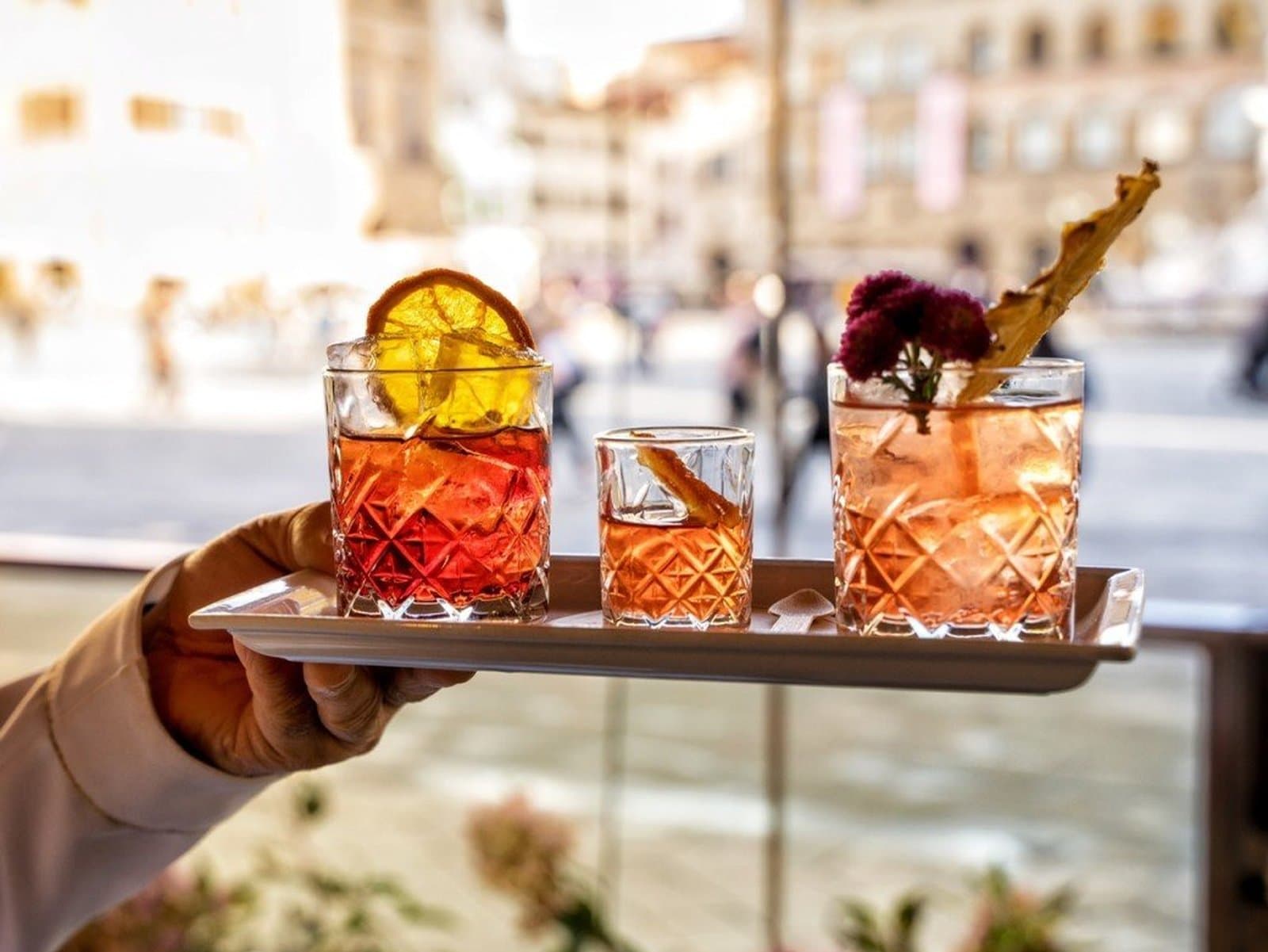
The Negroni — equal parts gin, sweet vermouth, and Campari — is the rare drink that has never been improved upon. It is also the rare drink that tastes measurably better in the city where it was born. Whether this is terroir, psychology, or the quality of the Campari is a debate we've had at several Florentine bars without reaching consensus. But the fact remains: there is no better place on earth to drink a Negroni than Florence.
The Origin: Caffè Casoni (Now Caffè Roberto Cavalli)
The building at Via de' Tornabuoni 83r still stands. It's now a Roberto Cavalli café — glossy, branded, and bearing approximately zero resemblance to the bar where Count Negroni had his epiphany. But the address matters. Stand on the street with your drink (you can order a Negroni here, though we'd recommend going elsewhere to actually enjoy it) and know that you're standing at the geographic center of cocktail history.
Where to Drink It
The best Negroni in Florence is not at the fanciest bar. It's at the bar that understands that this drink requires three things: proper proportions, proper ice, and proper indifference to the notion that a Negroni needs improving.
Our top three, in order of preference:
**Caffè Rivoire, Piazza della Signoria.** The Negroni here is textbook — nothing clever, nothing deconstructed, nothing smoked or barrel-aged or infused with anything. Just the drink, made correctly, served on a piazza that Michelangelo walked across. The markup is for the view. Pay it.
**Mad Souls & Spirits, Via de' Bardi.** The serious cocktail bar option. Niko Bacelle's team makes a classic Negroni that's flawless, but they also run a seasonal menu that plays with the format — a white Negroni with gentian liqueur, a Negroni aged in miniature barrels. This is where Florence's aperitivo tradition meets contemporary craft. Cross the Ponte Vecchio to get here.
**Procacci, Via de' Tornabuoni.** A truffle shop since 1885 that also serves excellent drinks. Order a Negroni and a truffle panino. Sit at the tiny bar. This is the most Florentine experience on the list — unshowy, precise, and impossible to replicate anywhere else.
“The Negroni doesn't need improving. It needs a piazza, a sunset, and the patience to drink it slowly.”
The Anatomy of the Drink
Equal parts. Always equal parts. The Negroni's genius is its democracy — no single ingredient dominates. The gin provides structure, the Campari provides bitterness, and the sweet vermouth provides depth. The orange peel is not decorative; its oils interact with the Campari to soften the bitter edge.
If a bartender asks what gin you'd like, say Tanqueray or Plymouth. If they suggest Hendrick's or anything botanical-forward, find another bar. The Negroni is not the place for gin to show off. The gin's job is to be strong, clean, and invisible.
The Aperitivo Hour
In Florence, aperitivo begins at 6:30pm and ends when dinner begins — which, in Italy, means 8:30 at the earliest. This window is sacred. It's not happy hour. It's not pre-gaming. It's the daily ritual of transitioning from the pace of the afternoon to the pace of the evening, and the Negroni is its presiding spirit.
The best aperitivo in Florence happens on the Oltrarno — the south bank of the Arno. The light at 7pm in summer is golden, the streets are quieter than the centro storico, and the bars are better. Start at Mad Souls, have one Negroni, then walk to dinner. That's it. That's the whole ritual. Don't overthink it.
The Clipper Briefing
Florence is best visited in shoulder season — April through May, or September through October. The heat in July and August is punishing and the crowds are worse. Stay in the Oltrarno if you can; the Santo Spirito neighborhood has the best ratio of quality to tourist density in the city. The Negroni costs between €8 and €14 depending on the piazza. Worth every cent at any price.
Enjoyed this? Get The Dispatch.
Travel intel, cocktail notes, and first-class reviews — every Thursday.